Hope and power: Organizing to challenge the corporate coup
Dear friend,
A few months ago, I became a U.S. citizen. I did so with clarity about the country’s history and present. How it was built on stolen land, genocide, and slavery. The outright and covert wars it’s waged (often corporate-backed, for corporate profit), harming people and land around the world — including my homeland of Mexico.
And I did it with clarity that the U.S. — as a concept and as a reality — has always been an argument. From the start, there have been those who believe rich, white men should rule over the rest of us. And they’ve been countered by those who believe in a diverse, equitable, and democratic society that embraces and cares for everyone.
I couldn’t have chosen a more fraught time to enter into this argument as a U.S. citizen: during a corporate-backed coup. By this I mean a moment when consolidated transnational corporate power is destabilizing democracy by bankrolling authoritarian actors and capturing institutions like courts, the military, and schools. Indeed, the actions of the Trump regime echo those of the authoritarian government I lived under as a youth. And the possibilities of a vibrant, democratic, and just society feel frighteningly far away.
But if you’ve met me or you know how Corporate Accountability operates, you can probably guess that I don’t easily back down from a challenge. I, and we as an organization, believe that if there was ever a time to lean hard into our values and our vision for a better world, it’s now. Now is the time to harness our hope and determination. And now is the time to get focused on strategic organizing, coalition building, and investing in movement infrastructure.
I’m here for it, both as a new U.S. citizen and the new(ish) executive director of Corporate Accountability. Because this crisis, decades in the making, is not just a political problem. It’s also a structural one, rooted in decades of transnational corporate power run amok.
If we — the broad we who believe in all our freedoms, care, and justice — are to win our side of the argument, we have to get to the heart of the matter. We have to challenge the corporate power that’s a primary force behind this crisis. I can’t think of a better way to channel my energy and resources to make a lasting impact in this moment than to lead this organization toward achieving our mission.
Removing the corporate pillar propping up the regime
For years, Corporate Accountability’s campaigns have been engaging at the intersection of democracy and issues like water, climate, public health, and more. At the core of all our campaigns is challenging the many ways that corporations have infiltrated our lives, communities, and government.
At this point you’ve probably heard of the concept of the “pillars of power.” All governments — democratic and otherwise — are held up by pillars: the military, federal and civil workers, the courts, media, corporations, nonprofits, and more. When enough of these pillars of power are challenged and dismantled, the government can no longer stand. Across history and around the world, this is how people’s movements have brought down authoritarian regimes.
So in this moment, our work to challenge the corporate pillar holding up the Trump regime is critical. And, we knew as Trump came to power again, we needed to do even more — to strengthen our strategy, to be braver, and to innovate further.
Campaigning for lasting victory
Although we don’t usually talk about our campaign development, I want to share a bit of the behind-the-scenes work that we’ve been engaged in toward this end.
Campaign development isn’t always the shiniest or most exciting part of our work. But it’s the blueprint for how we and our allies have forced changes from some of the most dangerous and powerful entities on the planet: transnational corporations like Nestlé, GE, Philip Morris, and Veolia.
Our starting point is always a set of questions: Who (people and corporations) is standing in the way of a more liberatory and just world? What are they doing that causes the most harm? How do we most effectively shift power so that these people and corporations are forced to stop their abusive and harmful actions? What role can we play in broader movements seeking the same end? And, given our experience and analysis, resources, and relationships, how can we achieve the greatest impact possible?
By answering these questions, we create long-term goals that serve as our guiding stars. From there, we make multi-year and six-month plans to ensure we are tracking successfully toward our goals and vision. These plans are informed by landscape analysis (who is already doing this work, how, and where are the gaps) as well as research and power mapping. We create and implement narrative strategy to support the goals, and — most importantly — build people power behind our demands and goals.
We can have the biggest impact right now by bringing our corporate campaigning expertise to challenge the corporate “pillar of support” behind the Trump regime. Especially as it intersects with corporations that we are currently challenging across our campaigns.
The importance of infrastructure, long-term vision, and coalitions
As we engage in our campaign development, we’re also making sure we’re learning from recent global history.
For some, this current political moment in the U.S. might feel unprecedented. But we only need to look beyond our borders to see we are not alone. For decades, Corporate Accountability has campaigned with and learned from allies in the Global South directly challenging corporations that back authoritarianism.
One lesson we are holding is that mass protest movements are not enough. From Egypt to Hong Kong, global uprisings over the last few decades did not have the coalitions or infrastructure to secure lasting change. Vincent Bevins, author of If We Burn: the Mass Protest Decade and the Missing Revolution, has written about how such protests created shifts and potential for change. But they were not equipped to put forward new governments or demand concessions from the powers that be. The protests created power vacuums, but without strong coalitions guided by long-term visions, the movements were too often attacked and co-opted.
In the U.S., the mass protests of Occupy, the racial reckoning uprisings of 2020, the #MeToo movement, and others followed a similar pattern. I’m thinking especially about how donors generously funded the expansion of these movements, but fewer supported coalitions-building and organizations with both the vision and infrastructure to sustain the work. And today, as the Trump regime launches attack after attack on our communities, many are understandably responding to the immediacy of these threats. But if we are to make lasting change, people must also resource long-term campaigning and coalition building.
Collectively, we must move with a vision that includes and extends beyond responding to the latest horror of the Trump regime. Challenging fascism is a struggle for the long run, and at Corporate Accountability, our campaigns are built to last. Our model has helped us win short-term victories that make people’s lives better while also creating enduring impacts that shift power and change systems.
A critical component to winning and sustaining such victories is being part of broad, diverse coalitions. We seek to not only join and form coalitions resisting what we don’t want in the short term, but also those that can hold together and consolidate people power after victory. Courageous coalitions do this by asserting a more positive vision about where we are headed and our ability to cooperate with each other to create that world.
Hope: the source of imagination
As importantly, we have to actually believe in that vision and our ability to bring it to fruition. This requires hope.
Hope doesn’t come easy, but it’s what keeps me going. I think about hope as defined by the 12th century scholar Maimonides. He wrote that hope is the belief in the plausibility of the possible, as opposed to the necessity of the probable.
Stepping into this role, I was delighted to find such hope is behind all of Corporate Accountability’s work. We go after what is necessary — not what seems politically or otherwise feasible. This kind of hope is the source of our imaginative strategy, and it’s what has allowed us to win victories time and again that many thought were impossible.
Hope is not an individual action; it’s a collective imagining. When one of us feels beat down and defeated, someone else can be a source of hope for them, knowing that the roles will be reversed down the line. This is the culture of collective hope I’m committed to continuing to foster at this organization — among staff, board, and members like you. Coming together in this spirit is what is going to get us through this.
So I choose to lead with hope in this moment — not from a naïve place, but from a moral ground, toward collective liberation. And I’m grateful and inspired to do so in community with you.
Onward,

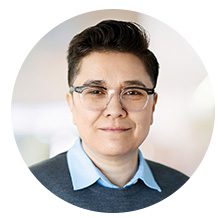
Ari Belathar, Executive Director