This November, people around the world came together to challenge Big Polluters’ and Big Tobacco’s deadly agendas.
The forums? Two international treaty meetings—one in Belém, Brazil (climate), and the other in Geneva, Switzerland (tobacco control).
The vibe? Righteous outrage meets corporate capture meets international diplomacy.
It was a lot, all at once. So let’s break it down:
The corporations and billionaires propping up the wannabe dictator in the U.S. are the same ones blocking climate action and pushing products that kill people and harm the planet. From the U.S., to the highest levels of the U.N., including at these treaty meetings, they’re extending their tentacles, selling snake oil packaged as “solutions” to the problems they’ve fueled—and trying to block real and life-saving solutions.
So at both the climate and tobacco treaty negotiations, Corporate Accountability partnered with allies around the globe and people like you to challenge these corporations—to protect our health, our freedoms, our communities, and the Earth we call home. Here’s a little bit of what that looked like.
Kicking Big Polluters Out
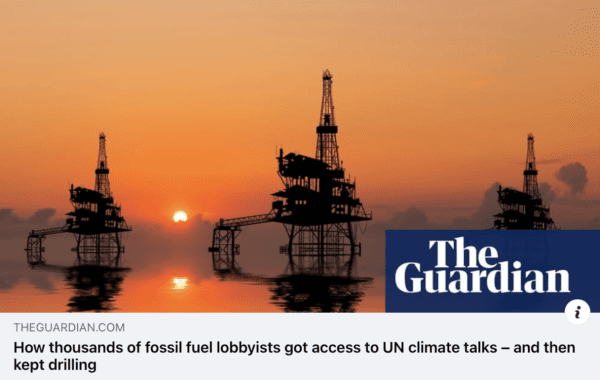
Headlines that exposed Big Polluters’ presence greeted delegates as they made their way to the U.N. climate treaty negotiations.
Before the U.N. climate talks even started, the Kick Big Polluters Out coalition—which Corporate Accountability helps coordinate—exposed the extent of Big Polluters’ presence over the last four years of climate talks: more than 5,350 fossil fuel lobbyists attended. The coalition’s analysis revealed how much recent oil and gas production some of these Big Polluters have been responsible for while they’ve been undermining climate action. The research was featured in an exclusive Guardian story that was picked up by outlets around the globe—putting governments and industry on notice on the eve of the climate talks.
The Kick Big Polluters Out (KBPO) coalition then crunched the numbers and exposed that approximately one in every 25 participants at this round of climate talks was representing fossil fuel interests. It’s the highest concentration since this research began, outnumbering delegates from countries on the front lines of the climate crisis.
But while fossil fuel lobbyists flooded the talks, the people took to the streets and to the media. Together, we were determined to defy Big Polluters and bring new possibilities into being.
The Kick Big Polluters Out coalition put our collective, global media organizing muscles to work—and as a result, this analysis was cited in dozens of media articles and social media posts around the world. It grabbed headlines in top U.S. outlets like the Financial Times to Newsweek, wire services like Agence-France Presse (AFP) that are syndicated around the world, and local and regional outlets. KBPO’s research was also featured in videos on Instagram and TikTok by news outlets like Channel 4 and activist organizers like Greenpeace, who harnessed it to great effect in confronting one fossil fuel executive at the talks. Altogether, this media coverage helped shift the narrative around who’s calling the shots in the halls of the U.N.—and who really should be.
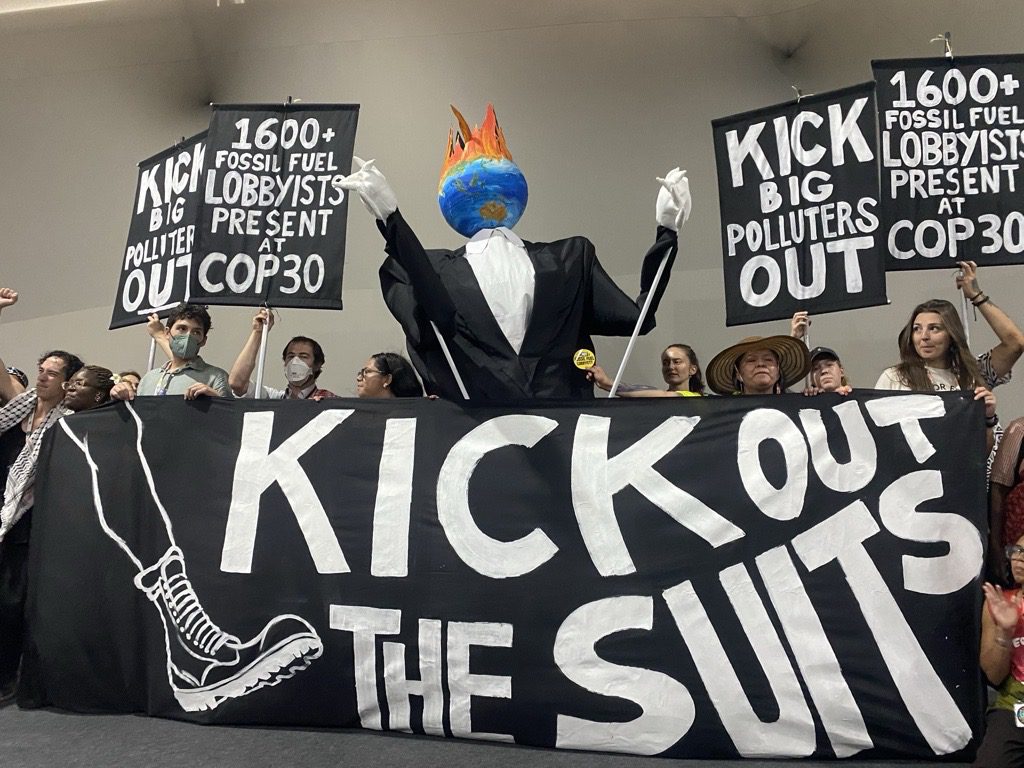
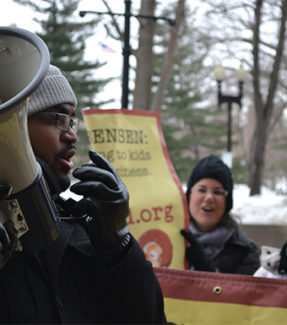
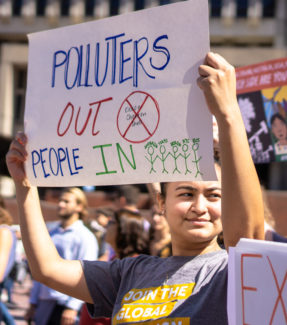
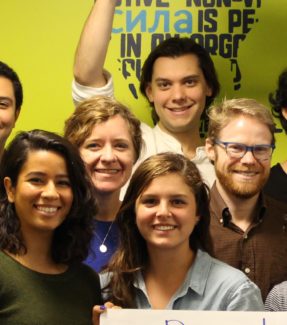
Throughout the climate treaty talks, we joined KBPO partners in protests and events that made it clear: Big Polluters are not welcome!
Photo credit: Bianka Csenki, Artivist Network
To be sure, the institutional power wielded by Big Polluters and the Global North governments in their pockets was on full display. But we the people refused to roll over. We came together and fought with everything we had—at the negotiations and around the world.
One example: Thousands of folks like you took action, calling on U.N. Secretary General António Guterres to Kick Big Polluters Out of the climate talks, and rein in fossil fuel industry influence through the U.N. Together, we sent a clear message that, even though the U.S. government may not officially be at the international climate negotiations, we the people are deeply concerned about the climate crisis. And we want real climate solutions that prioritize the lives and needs of people and the planet we call home, not false solutions that put the profit of corporations over our survival.
In the end, despite the titanic influence of Big Polluters, we the people secured some hard-fought steps towards climate justice. The climate justice movement laid the groundwork for a pathway towards a just and equitable transition away from fossil fuels—a transition that must honor the needs of workers and others on the front lines of the climate crisis. Together, we also successfully delayed and weakened dangerous schemes pushed by Big Polluters at the talks.
Building the movement to make Big Polluters pay
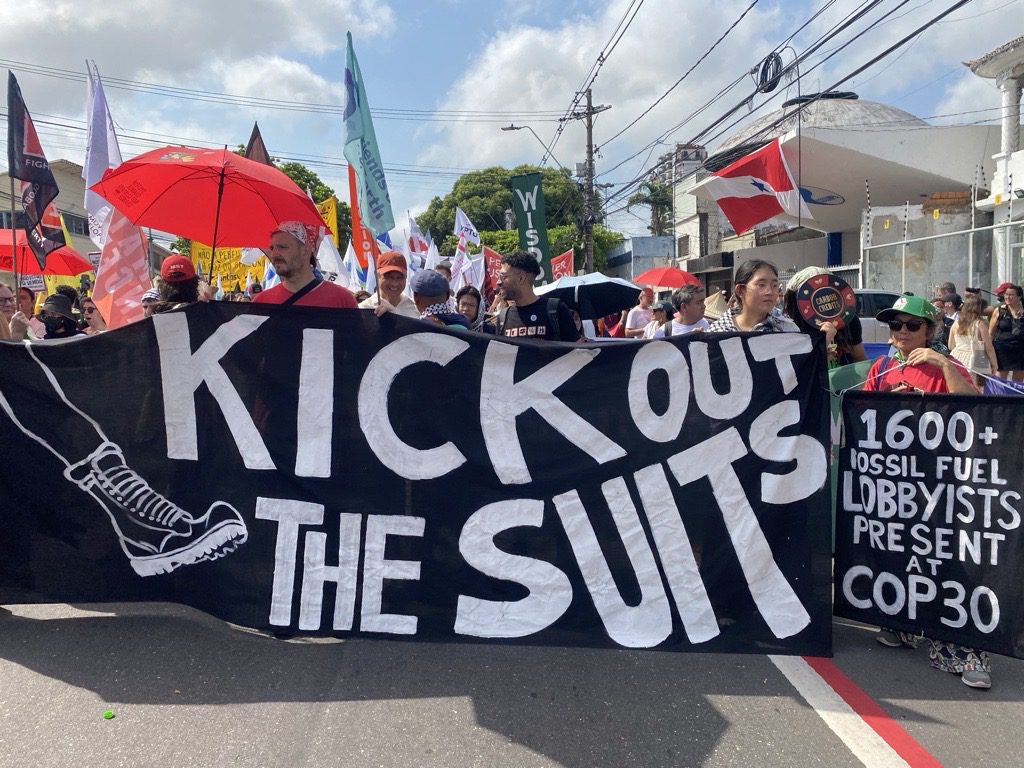
Tens of thousands of people took to the streets to demand climate justice
While we organized to help shift what’s possible inside the U.N. climate treaty negotiating rooms, we’ve also been collectively shifting what’s possible outside of them. Our Latin America climate campaign has been organizing for several years to move more of the region’s climate movement to challenge corporate abuse, and make Big Polluters pay.
And during the People’s Summit—which ran alongside the first week of the treaty negotiations and drew 15,000 attendees—the progress we’ve made was evident in the relationships we built and the topics discussed. And after much debate, the final declaration from the summit included a call to make Big Polluters pay for “the socio-environmental debt accumulated through centuries,” a demand to “end the exploitation of fossil fuels,” and an “opposition to any false solutions to the climate crisis.
The power of people was on full display at a march at the culmination of the summit that brought nearly 70,000 people out to the streets.
Making Big Tobacco pay for its abuses
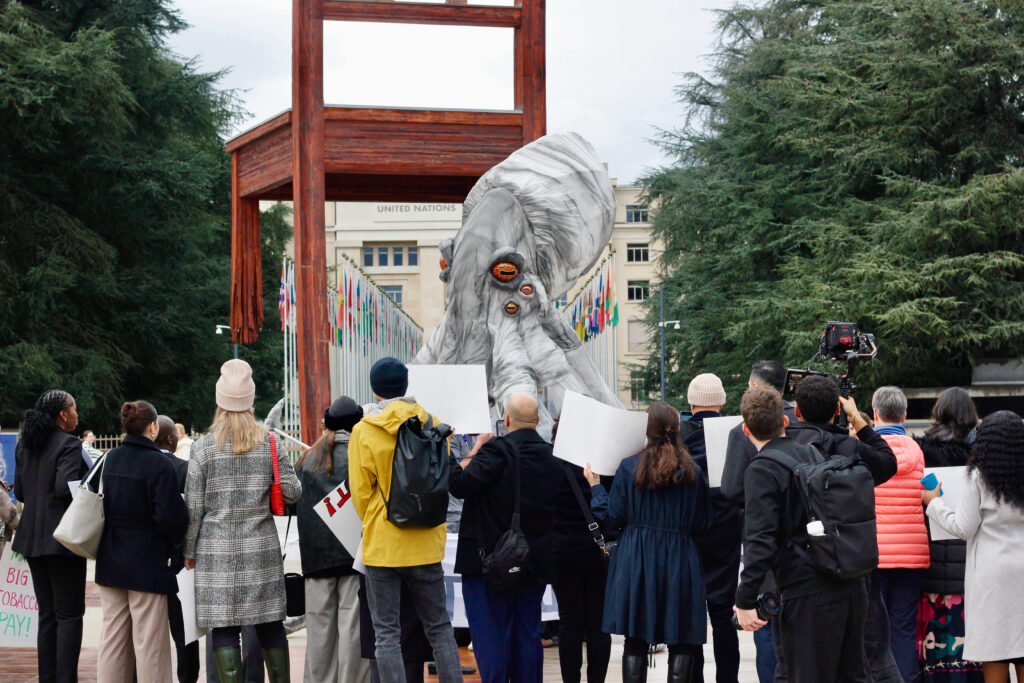
Exposing the deadly reach of Big Tobacco through street theater. Photo Credit: Philippe Audi-Dor
At the same time that climate justice organizers were challenging Big Polluters at the climate talks, activists were going toe-to-toe with Big Tobacco in Geneva.
Here’s the thing: The global tobacco treaty, which marked its 20th anniversary this year, explicitly states that governments must protect public policy from the interests of Big Tobacco. And Corporate Accountability and our allies were pivotal in securing the adoption of this provision. But from the start, the tobacco industry has sought to undermine this measure and infiltrate the treaty talks. So it’s critical that we and our allies show up to protect this space from the industry’s influence.
This year, for example, we made sure that delegates stated clearly who they represented—and that they weren’t there to do Big Tobacco’s bidding. Thanks to our and our many allies’ dogged organizing, governments representing more than 75% of the world’s population complied with disclosure measures we secured several years ago.
To highlight the need to challenge Big Tobacco, we and our allies staged a street theatre performance and action on the first day of the talks. The spectacle exposed industry interference in a highly visible way, securing media coverage in the world’s largest Spanish-language wire service. It made clear that we the people were organized, united, and determined to stop tobacco industry interference. And it emphasized our demands that government delegates use the treaty meetings to curb Big Tobacco’s influence in public health policy and make Big Tobacco pay.
The next day, we took the demands of nearly 40,000 people straight to the president of the global tobacco treaty talks. The box of petitions said it all: people around the world are calling for Big Tobacco to pay for fueling death, disease, and environmental destruction.
And we saw great success: despite resistance from governments in Big Tobacco’s pockets, delegates adopted recommendations for how governments can hold the tobacco industry liable, and will keep developing resources for further guidance in the lead-up to the next meetings in Armenia in 2027. This will accelerate momentum to make Big Tobacco pay for its abuses around the world.
So that’s the scoop. People around the world are rising up, confronting the unchecked corporate power that’s frankly at the root of so many of the crises we face (including rising authoritarianism). Corporate Accountability shows up in contested spaces like U.N. treaty meetings because they are democratic forums where people’s needs and experiences—not corporate interests—should be the priority.
With people like you by our side, we’ll never stop fighting for a world where corporations answer to people and not the other way around.